

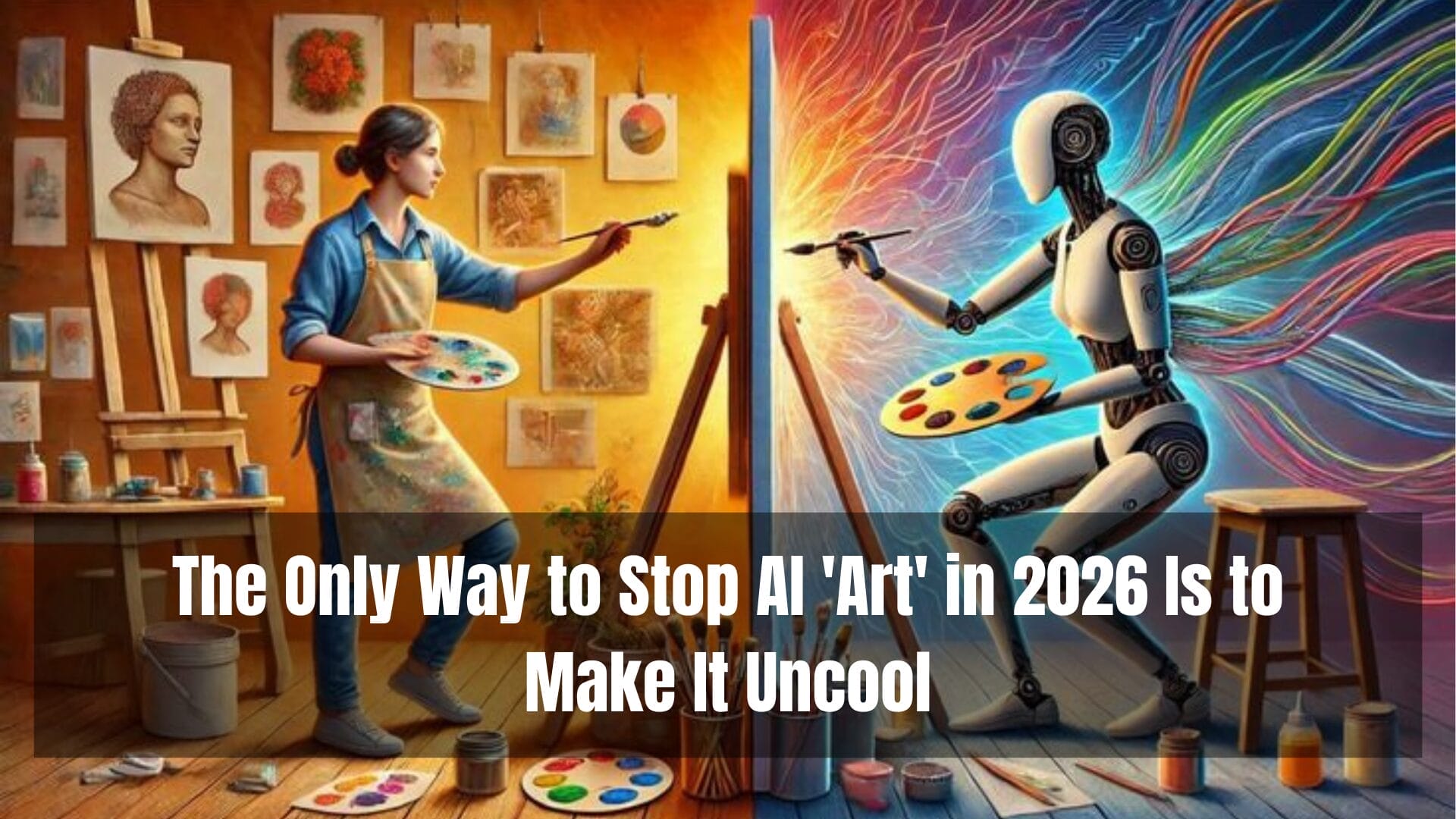
The rapid advancement of generative artificial intelligence in recent years has fundamentally altered the creative landscape. Image and video generation tools have evolved at an unprecedented pace, moving from visibly flawed outputs to content that can closely resemble professionally produced media. By 2025, AI-generated visuals and videos became nearly indistinguishable from human-made work in many contexts, raising urgent questions about authorship, originality, ethics, and cultural value.
While these technologies are often promoted as tools that “democratize creativity,” growing criticism suggests that generative AI may instead be diluting creative standards, overwhelming digital platforms with low-quality content, and undermining human-centered artistic practices. As adoption accelerates into 2026, many analysts argue that technical safeguards and corporate regulation alone will be insufficient to address these issues. Instead, a broader cultural shift may be required—one that challenges the social desirability of AI-generated “art.”
Accelerated Progress and Widespread Adoption
Generative AI models for images and video made dramatic gains throughout 2025. New releases from companies such as Google and OpenAI demonstrated substantial improvements in realism, motion consistency, lighting, and audio synchronization. Video generation tools once plagued by visual artifacts and temporal errors now produce clips capable of mimicking cinematic techniques.
These advancements coincided with a sharp increase in public use. AI-generated content rapidly became common across social media platforms, marketing campaigns, and digital entertainment. The sheer volume of AI output has reshaped online environments, often blurring the distinction between human-made and machine-generated material.
However, increased capability has also intensified concerns. As AI-generated content becomes more convincing, it raises risks related to impersonation, misinformation, and unauthorized use of personal likenesses. These issues are compounded by the lack of universal labeling standards and the limited effectiveness of existing detection tools.
Copyright, Ownership, and Legal Challenges
Throughout 2025, opposition from artists, writers, and rights holders became more pronounced. Several major legal actions highlighted unresolved questions around training data, intellectual property, and consent.
Major entertainment companies including Disney and Warner Bros. initiated lawsuits alleging that generative AI systems were trained on copyrighted works without authorization. In parallel, authors brought claims against AI developers, leading to high-profile settlements, including a reported $1.5 billion agreement involving Anthropic.
These disputes underscore a central criticism: generative AI systems rely on vast datasets of existing human-created material, enabling them to reproduce stylistic patterns without contributing original cultural context or lived experience. Critics argue that this process amounts to large-scale imitation rather than genuine creativity.
Environmental and Infrastructure Concerns
Beyond legal and artistic considerations, generative AI has introduced significant environmental challenges. Image and video generation require substantial computational resources, leading to increased energy consumption and water usage. The expansion of large-scale data centers across the United States and other regions has drawn criticism from environmental scientists and local communities.
As demand for AI-generated video grows, so does concern about sustainability. Unlike traditional creative tools, generative models require continuous large-scale computation, raising questions about long-term ecological costs and responsible deployment.
Limitations of AI as a Creative Medium
Despite technical sophistication, generative AI systems remain fundamentally constrained by their design. These models generate content by identifying and reproducing statistical patterns in training data. While this enables stylistic imitation, it does not allow for emotional intent, critical reflection, or conceptual risk-taking.
Art, in its traditional understanding, is deeply tied to human experience. It reflects personal histories, social tensions, emotional struggles, and cultural context. Numerous artists and scholars argue that AI-generated content lacks these qualities, making it incapable of producing work that meaningfully challenges audiences or contributes to collective cultural understanding.
Research has also suggested that reliance on AI tools can reduce critical engagement, particularly in creative processes that benefit from ambiguity, discomfort, and experimentation. This raises concerns about the long-term impact of AI on creative thinking and cultural literacy.
The Proliferation of Low-Quality Content
One of the most visible consequences of generative AI adoption has been the rise of low-effort, mass-produced content often described as “AI slop.” These images and videos are typically designed to attract attention rather than convey meaning, and they have become increasingly common on social media platforms.
This saturation has altered the online experience, making it more difficult for audiences to identify thoughtful, high-quality work. Critics argue that this environment discourages originality and rewards volume over value, contributing to declining standards across digital spaces.
Why Corporate Self-Regulation Is Insufficient
Technology companies have emphasized their efforts to implement safeguards, including content moderation systems and AI-generated media detection tools. However, these measures have proven inconsistent and easy to bypass. The competitive nature of the AI industry incentivizes rapid deployment over cautious restraint.
Because generative image and video tools are now considered essential to remaining competitive, companies face strong financial pressure to expand capabilities regardless of social consequences. As a result, meaningful limitations on AI-generated creative content are unlikely to originate from within the industry itself.
Cultural Influence as a Regulatory Force
Given these limitations, some analysts argue that cultural norms may play a decisive role in shaping the future of generative AI. Public backlash against AI-generated advertising campaigns in 2025 demonstrated that audiences are willing to reject machine-generated content when it feels inauthentic or exploitative.
Increasingly, artists and creators emphasize transparency, explicitly stating when work is created without AI assistance. In some creative communities, distancing from generative AI has become a marker of credibility rather than resistance to innovation.
Reducing the cultural appeal of AI-generated “art” may therefore function as an informal but effective constraint. When audiences value human authorship, emotional depth, and creative process, demand for low-effort AI output diminishes.
Looking Ahead to 2026
Generative AI is expected to continue expanding in both capability and availability. While it offers practical benefits in areas such as automation, accessibility, and ideation, its role in creative production remains contentious.
Addressing the challenges posed by AI-generated content will require more than technical solutions or corporate assurances. It will depend on cultural expectations, audience discernment, and a renewed emphasis on human-centered creativity.
As digital environments become increasingly saturated with automated output, distinguishing meaningful creative work from algorithmic replication may become one of the defining cultural challenges of 2026.
References
CNET – Coverage on generative AI, image and video models
https://www.cnet.com/tech/ai/
The New York Times – Reporting on AI copyright and training data lawsuits
https://www.nytimes.com/spotlight/artificial-intelligence
MIT Technology Review – Environmental impact of AI infrastructure
https://www.technologyreview.com/
The Guardian – Artists and cultural responses to generative AI
https://www.theguardian.com/technology/artificialintelligence
Disclaimer
NextNews strives for accurate tech news, but use it with caution - content changes often, external links may be iffy, and technical glitches happen. See full disclaimer for details.